On the water
Running Shallow Rivers in a Mini Jet: Tips and Cold-Water Safety
|7 min read
How to read river water, protect your pump and hull, and stay safe in cold water. Practical tips for mini jet owners in Alaska and beyond.
Running skinny water is why most people buy a mini jet. It is also where most trouble starts. These tips come from how jet drives work and from what experienced river runners teach. They are not a replacement for time on the water with someone who knows your river.
01Learn your boat in deep water first
A jet handles differently than a prop boat, especially at low rpm. Spend time in open, deep water first. Learn how it turns, how it stops with the reverse bucket, and how it feels coming off plane.
02Keep enough speed to steer
A jet steers with the water it pushes out. Slow down too much in a tight spot and you lose steering. If the engine stops, you lose it completely. Pick your line early and keep enough throttle to stay in control.
03Don't sit idling over sand and gravel
At idle, the pump is still pulling water up through the intake. Sitting still over sand or small gravel can suck it into the pump, and on some engines into the cooling system. Cross shallow spots with purpose, and stop to idle in deeper water.
04Read the water
- Go upriver first
- Learn new water by running upstream. Water is easier to read when you are looking uphill at it.
- Boils
- Water flowing over a hidden rock bulges up just downstream of it. Treat a boil like a pothole and steer around it.
- Riffles
- Choppy, fast water over rocks. Bigger rocks near the surface throw up more whitewater, so weave between the bigger waves.
- Above a riffle
- Some of the shallowest water on a river sits just upstream of a riffle, where a deep pool shallows out.
05Watch for floating debris
Plastic bags, rope, and weeds can clog the intake grate fast. If the boat suddenly loses push or the engine revs without moving you, suspect the intake. Shut the engine off before you clear it.
06Protect the bottom
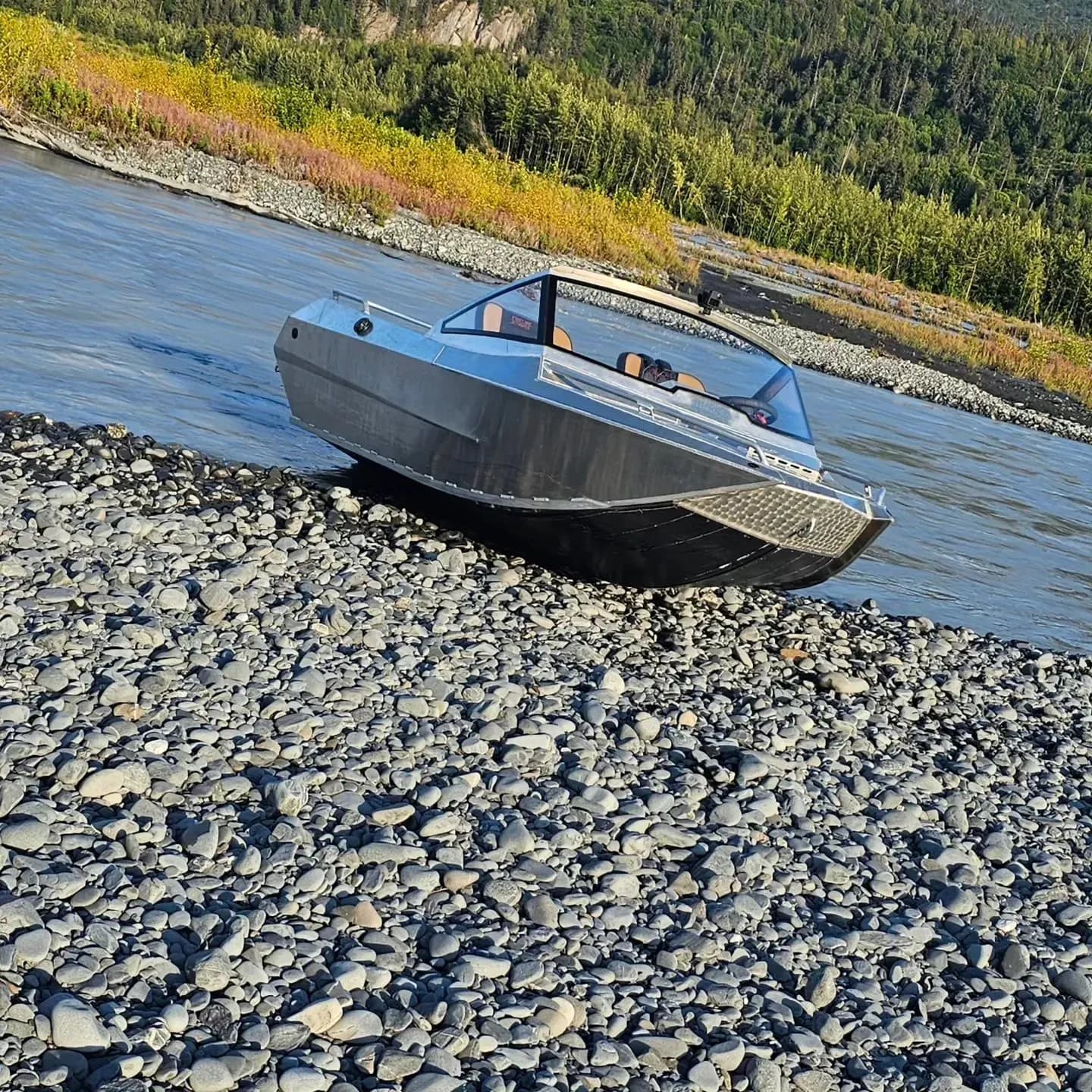
Aluminum is tough but it scratches and dents on rock. A layer of UHMW plastic on the bottom helps the hull slide over gravel and takes the wear instead of the aluminum. Every FineLine mini jet gets UHMW on the bottom for this reason.
07Check the pump after hard runs
Rocks that get past the grate can nick the impeller. Over time, the gap between the impeller and the wear ring around it grows, and the boat loses push. Look at your impeller and wear ring regularly, and follow your pump's service manual for the right gap.
08Dress for the water, not the air
The Alaska Office of Boating Safety says most boating deaths in Alaska come from drowning in cold water. Cold water works fast:
- Within 3 minutes
- Cold shock: gasping, fast breathing, and panic. Without a life jacket, the risk of drowning is high.
- Within 30 minutes
- Arms and legs stop working well, no matter how good a swimmer you are.
- After 30 minutes
- Hypothermia sets in as your core cools. A life jacket can buy you more time.
If you do go in wearing a life jacket, the state teaches the 1-10-1 rule. Take 1 minute to get your breathing under control. Use the next 10 minutes or so to make a plan and do the most important things first. After that, you may have an hour or more of useful consciousness, so focus on slowing heat loss.
09Tell someone, and carry a way to call
- Leave a float plan with a friend: your boat, who is aboard, your route, and when to call for help.
- Carry a way to call for help on your body, not in the boat: a waterproof VHF radio, or a phone in a waterproof case.
- Carry a way to signal, like a personal locator beacon, a whistle, or a mirror.
- Show your passengers how to start, stop, and steer the boat, and where the safety gear is.
This is general information, not training. Take a boating safety course and learn your river from people who run it. When you are ready for a boat built for it, see our mini jet boats.