Jet boat basics
How a Jet Boat Works, and Why It Can Run Shallow Rivers
|6 min read
No propeller, no lower unit. Here is how a jet drive pulls water in, pushes it out, steers, and stops, and what that means on a shallow river.
A jet boat has no propeller hanging under it. Instead, it pulls water in through the bottom of the hull and shoots it out the back. That one idea is why a jet boat can run rivers that would wreck a prop.
Here is how it works, part by part, and what it means when you are on the water.
Where the idea came from
The modern jet boat came from New Zealand. In the mid-1950s, engineer Bill Hamilton wanted a boat that could run up fast New Zealand rivers that were too shallow for propellers. His jet unit is the root of the jet boats people run today.
The five parts of a jet drive
- Intake and grate
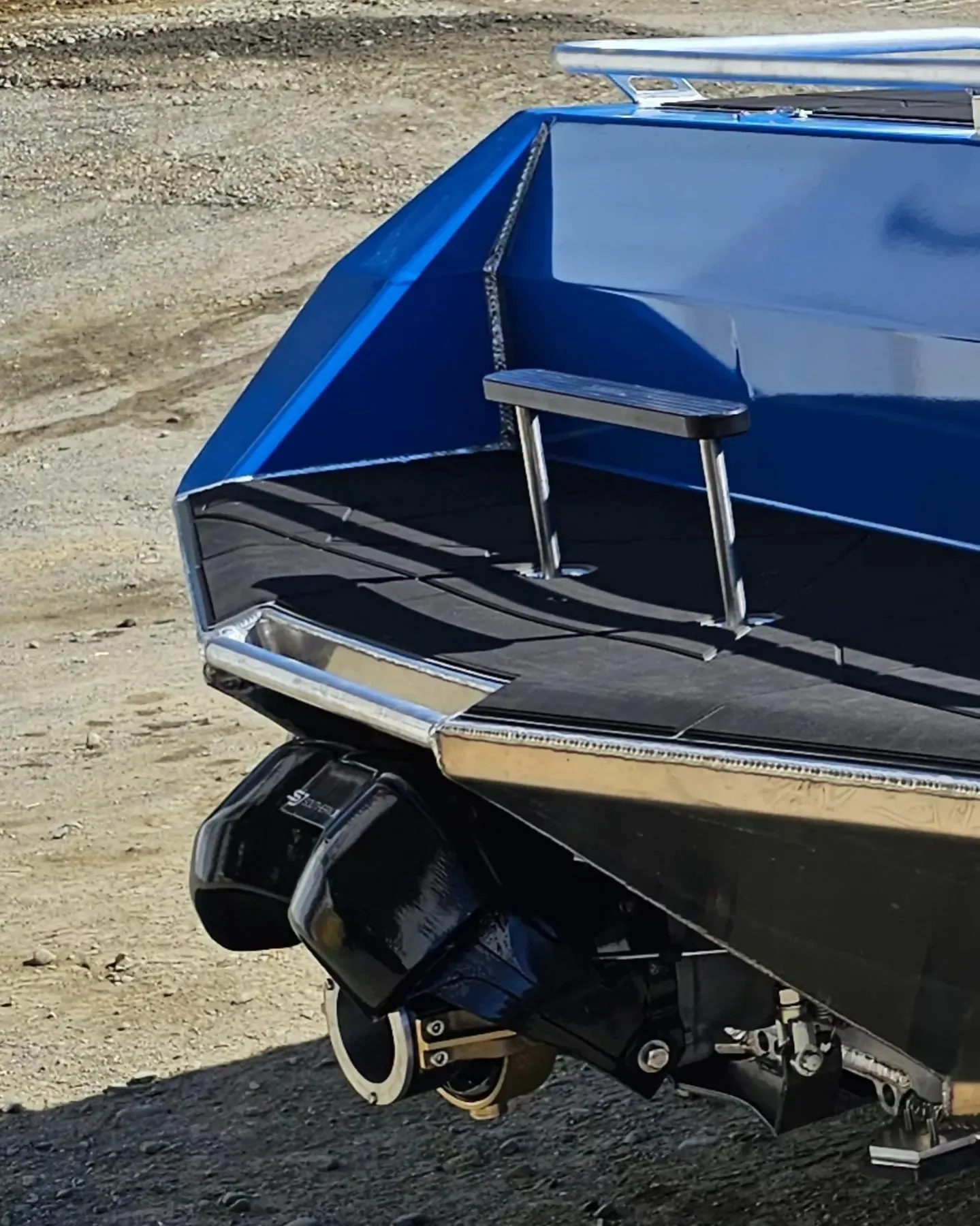
- An opening in the bottom of the hull, set flush with the bottom. A grate across it keeps rocks and junk out of the pump.
- Impeller
- A spinning blade inside a tube. The engine turns it, and it pulls water in and pushes it toward the back of the boat.
- Stator
- Fixed vanes behind the impeller. They straighten out the twisting water so more of the push goes straight back.
- Nozzle
- The narrow opening at the back. Water leaves it as a fast jet, and that jet pushes the boat forward.
- Reverse bucket
- A curved plate that drops over the nozzle. It sends the jet forward and down, so the boat stops or backs up.
How a jet boat steers
There is no rudder. When you turn the wheel, the nozzle turns, and the jet pushes the back of the boat the other way. The boat turns because of the water it is pushing out.
Set the reverse bucket halfway and the forward and backward push cancel out. The boat can sit still while you still steer it.
Why it can run shallow water
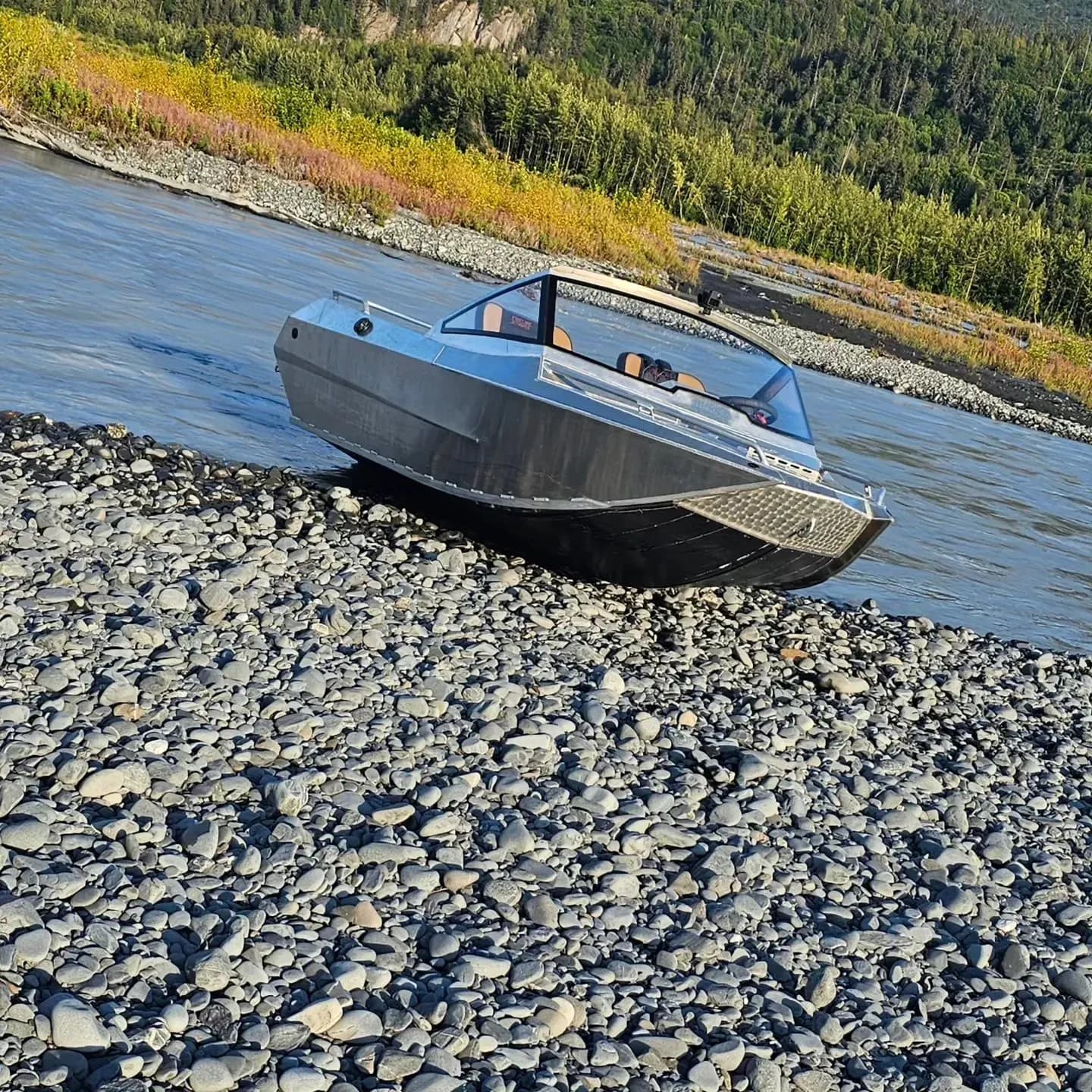
On a prop boat, the propeller and lower unit hang below the hull. They are the first thing to hit a rock. On a jet boat, the whole drive sits inside the hull, and the intake is flush with the bottom. Nothing sticks down.
Once a jet boat is up on plane, it rides on top of the water. That is when it can cross the shallowest spots. You will hear claims of 3 inches of water or less. The real number depends on your hull, your load, and your speed, so learn your own boat before you trust any number.
The trade-offs
- Slow-speed handling: with less water moving through the pump, a jet steers less at idle and can wander. Docking takes practice.
- Fuel at slow speeds: props are more efficient at low speed. Jets close the gap once the boat is on plane.
- Debris: plastic bags, rope, and weeds can clog the intake. Rocks pulled into the pump can nick the impeller.
- Safety upside: with no exposed propeller, a jet is safer for people in the water around the boat.
What this means for a mini jet
A mini jet puts this system in a small, light hull. Most use a personal watercraft engine and pump, like those from Yamaha, Kawasaki, or Sea-Doo. A light boat gets up on plane fast and rides high, which is exactly what you want on a skinny river.
Want to see how we set them up? Read about our mini jet boats or start a build.